
Get your daily dose of health and medicine every weekday with STAT’s free newsletter Morning Rounds. Sign up here.
Good morning. I hope you watched the exact amount of football that you wanted to yesterday, and ate the exact right number of pigs in a blanket.
The truth behind TrumpRx drug prices
President Trump claims that the administration’s new TrumpRx website will offer the cheapest prices in the world for 43 brand-name drugs — and counting. But a STAT analysis found that about half the drugs are already available as generics, usually for much less money.
“They added a bunch of brands that have generics. So we beat them there. Usually by a lot,” said Mark Cuban, the former Shark Tank judge who runs his own direct-to-consumer drug site called Cost Plus Drugs. Read more from my colleagues on the specifics, including where people may be able to find even cheaper prices.
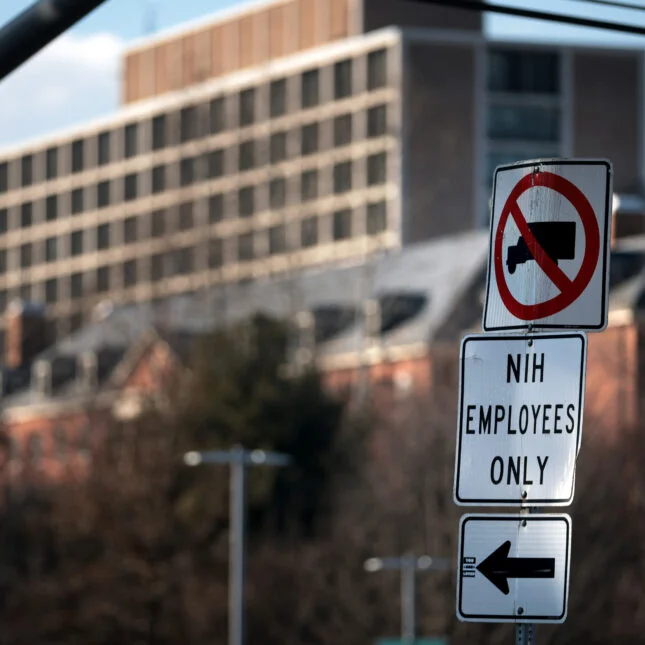
A new rule puts NIH grant reviewers at risk
Last spring, the Trump administration proposed a personnel rule that would reclassify broad swaths of federal bureaucrats as political appointees, leaving their employment up to the whim of the administration in power. That rule was finalized last week, and despite the fact that 94% of the public comments on the rule were against it, the final language appeared largely unchanged.
Read more from STAT’s Anil Oza on how the rule could further politicize NIH grant decisions. And for more on the federal agency chaos beat, read Jason Mast’s Friday story about layoffs at ARPA-H, the “moonshot” biomedical agency established under the Biden administration.
China criticizes U.S. for WHO withdrawal
A representative from China criticized the U.S. on Friday for withdrawing from the World Health Organization, saying that countries should not place domestic policies ahead of international law. The comment was made at a meeting of the WHO’s executive board, during a discussion about pullouts from both the U.S. and Argentina.
The discussion was surprisingly short, per STAT’s Helen Branswell — less than five minutes. Only representatives from China, North Korea, and Israel made comments. Read more from Helen on what exactly everyone had to say.
Who will take care of you?
It’s a simple question, but one that professor, neurologist, and STAT columnist Jason Karlawish believes will start a revolution in both the ethics and practice of dementia care. “To fail to ask this question, I think, is a failure to deliver what ought to be the standard of care,” he writes in a new column.
It might not sound intuitive, but Karlawish argues that asking this question preserves patient autonomy, while diseases that cause dementia threaten it. Read more about how the standard practice for dementia caregiving has changed over time and where the future may lie.
Survey says: Most women don’t want to do their own cervical cancer screenings
For many women, at-home self-sampling is just as effective at cervical cancer screening as a pap smear at the doctor’s office, according to new federal recommendations. But nationally representative survey data from 2024, published Friday in JAMA Network Open, shows that most women actually prefer going to the clinic in-person.
The study found that out of 2,300 women, 61% responded that they’d prefer to have a clinician do the test in their office if given the choice. Twenty percent preferred doing it themselves at home, while 19% were uncertain. Respondents who’d experienced prejudice or discrimination were much more likely to prefer at-home sampling.
What we’re reading
Newly revealed emails undermine RFK Jr testimony about 2019 Samoa trip ahead of measles outbreak, The Guardian
The FDA quietly slapped more restrictions on the birth control implant, Autonomy News
- First Opinion: As a scientist and NFL widow, I am furious about a recent NFL Players Association-funded CTE study, STAT
- Epstein files reveal deeper ties to scientists than previously known, Nature
- White House looks for more drug pricing deals to add to TrumpRx, STAT
What’s the word? Test your knowledge with today’s STAT Mini crossword.