What Is Pi? (Grades 5-8)
This article is intended for students in grades 5-8.
Understanding Pi
Pi is one of mathematics' most fascinating constants. Recognized by the symbol π or approximated as 3.14, this deceptively simple number conceals extraordinary mathematical depth beneath its familiar surface.
The Remarkable Properties of Pi
What truly sets pi apart from ordinary numbers is its classification as an irrational number. This means its decimal representation extends infinitely without ever settling into a repeating pattern. Mathematicians have pushed computational boundaries to calculate pi beyond one trillion decimal places — yet for practical engineering work, NASA scientists and mission specialists typically rely on nothing more than the familiar approximation of 3.14 to achieve the precision their calculations demand.
At its geometric core, pi represents the relationship between a circle's circumference and its diameter — specifically, the ratio you obtain when dividing one by the other. Remarkably, this ratio holds true universally: whether you are measuring a coin or a planet, pi remains a fixed mathematical constant that never changes.
———————————————————————————————
Key Terminology
irrational number: a numerical value that cannot be represented as a straightforward fraction, with a decimal expansion that continues infinitely without repetition
circumference: the total measured distance tracing the outer boundary of a circle
diameter: the length of a straight line passing directly through the center of a circle from one edge to the other
———————————————————————————————
The Wide-Ranging Applications of Pi
Far from being confined to classroom exercises, pi serves as an indispensable tool across numerous scientific and technical disciplines. Any calculation involving circular geometry, curved surfaces, or spherical volumes depends fundamentally on pi. Its reach extends across geometry, physics, aerospace engineering, signal processing, and computer science — making it one of the most universally applied constants in all of mathematics.
Pi at the Heart of NASA Missions
Space exploration would be virtually impossible without pi. Here is a closer look at how NASA engineers and scientists put this mathematical constant to work.
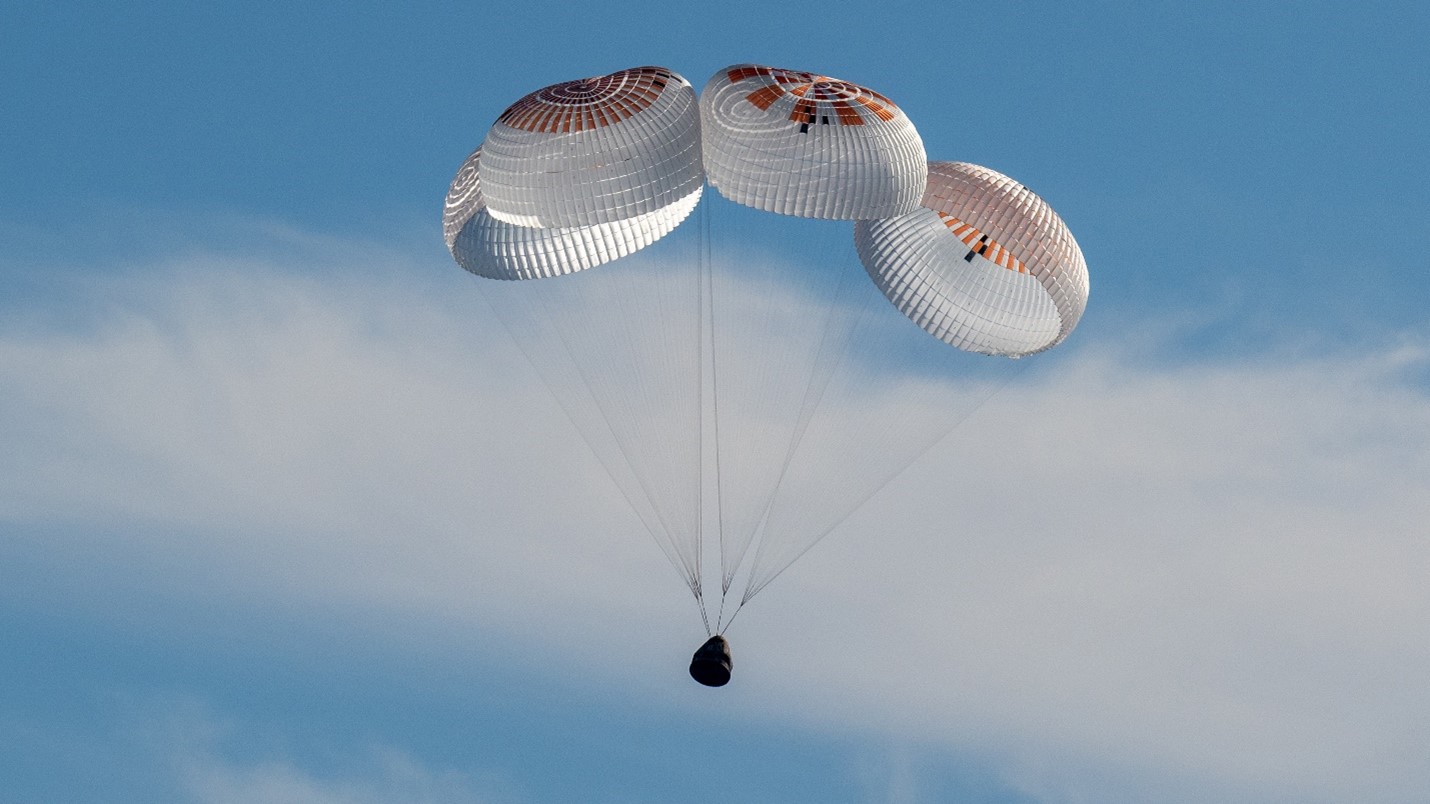
When astronauts conclude their missions aboard the International Space Station and begin their descent back to Earth, parachutes serve as a critical braking system to ensure a survivable landing. Determining the precise circular surface area those parachutes must cover — enough to generate sufficient atmospheric drag — requires engineers to apply pi in their aerodynamic calculations.
Planetary scientists leverage pi as a diagnostic tool for probing the internal composition of planets and asteroids. By using pi to compute an object's volume, then combining that figure with known mass data, researchers can derive the object's overall density. Cross-referencing that density against established values for materials such as silicate rock, water ice, and metallic compounds allows scientists to construct well-reasoned hypotheses about a body's internal structure — all without ever physically touching it.
Spacecraft fuel storage systems present another compelling application. Because fuel tanks are typically engineered in spherical configurations to maximize volume while minimizing structural weight, rocket engineers rely on pi to calculate total fuel capacity. Pi also governs calculations for monitoring fuel consumption rates and determining flow velocity through the cylindrical pipelines that deliver propellant to engines.
To explore the full breadth of pi's role in space exploration, visit 18 Ways NASA Uses Pi.
Career Corner
Curious about professions where pi plays a starring role? This mathematical constant underpins a surprisingly diverse array of technical careers. Consider these pathways into a pi-powered profession:
- Manufacturing technician: Translating engineering blueprints into physical hardware demands precision craftsmanship. The fabrication and assembly of spacecraft components and robotic systems frequently involve curved geometries where exact measurements are non-negotiable. Success in this field requires meticulous attention to technical specifications, and candidates often benefit from vocational or trade school training, along with certifications for operating industrial equipment and heavy machinery.
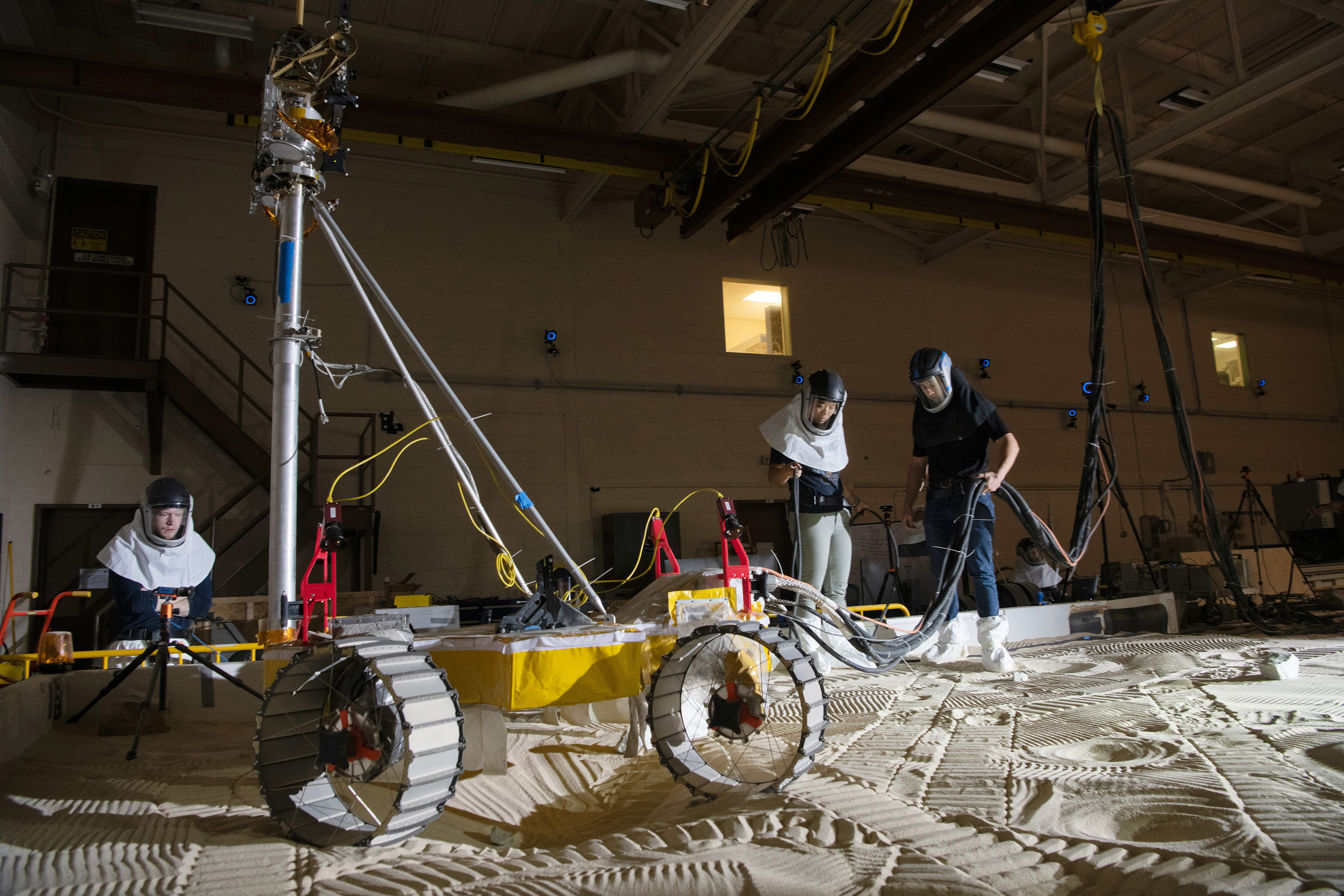
- Mars rover driver: Navigating a robotic explorer across the Martian surface is a fundamentally different challenge from terrestrial driving. Mars rovers have no onboard steering wheel — instead, a ground-based operations team transmits precise movement commands from Earth. Directing wheel articulation, managing robotic arm positioning, and executing turning maneuvers all involve angular calculations rooted in pi. Aspiring rover operators typically pursue college-level education in robotics engineering, software development, or related computational disciplines.
- Planetary scientist: Unraveling the origins and compositions of the solar system's diverse bodies — from rocky inner planets to icy outer moons and wandering asteroids — requires rigorous scientific investigation in which pi is a constant companion. Planetary scientists apply this mathematical tool to volumetric and density analyses that reveal what distant worlds are made of and how they formed. This career path generally requires advanced academic credentials, with relevant degree programs spanning astrophysics, geology, astronomy, and planetary science.
Explore More
How Many Decimals of Pi Do We Need Anyway?
The NASA Pi Day Challenge