This investigation is published in collaboration with the New York Times as part of The Times's local investigations fellowship.
As faith-based organizations nationwide expand their network of maternity homes serving pregnant women and adolescents, a Florida nonprofit wielding regulatory authority over several such facilities is drawing intensified scrutiny from state legislators who question whether its oversight practices adequately protect vulnerable residents.
The organization in question — the Florida Association of Christian Child Caring Agencies — holds regulatory jurisdiction over approximately two dozen facilities, encompassing maternity homes, ranches designed for at-risk youth, and group homes serving children whose parents are unable to provide adequate care.
Member facilities operating under its umbrella have accumulated allegations of abuse, staff misconduct, and unduly restrictive residential policies stretching back several decades. A joint investigation published in September by The New York Times and the investigative podcast Reveal documented that certain maternity homes had implemented severe restrictions on residents' communications and freedom of movement — including one facility that mandated residents install a location-tracking application on their smartphones and surrender those devices to a locked safe each night.
In a significant departure from standard child welfare practice, the association's member facilities are shielded from routine state inspection visits that apply to conventionally licensed homes. The association conducts its own internal reviews instead, holding member facilities to hiring benchmarks that government documentation indicates are measurably less stringent than those required under state licensure.
The association further supplements its oversight role by providing proprietary staff training. Within one web-based orientation course for newly hired personnel, an instructor recounted publicly humiliating a teenage resident who had been caught cheating on academic assignments — forcing the youth to display a handwritten placard reading, "I am a liar and a cheater."


In separate interviews conducted recently with The Times, four state legislators voiced alarm over what they characterized as the association's permissive oversight framework. State Representative Vicki Lopez, a Republican representing Miami, and State Representative Anna Eskamani, a Democrat from Orlando, both urged the Legislature to conduct a formal examination of the association's standards and practices.
Children placed in group home settings, Representative Eskamani argued, "require extra attention and support" and deserve facilities held to no lesser standard of care than any other residential program serving minors.
The association's executive director, Matthew Higgins, rebuffed multiple interview requests, citing active open-records litigation that The Times has initiated against the organization in pursuit of its maternity-home inspection documentation.
Florida's Department of Children and Families similarly declined to address questions regarding the association or its regulatory benchmarks.
The September joint investigation by The Times and Reveal highlighted how tightening abortion restrictions and escalating housing costs have driven pregnant women and teenagers to seek refuge in charity-operated maternity homes in growing numbers across the state.
Under Florida's regulatory framework, maternity homes serving only pregnant adults and their infants may operate entirely outside the government oversight apparatus. However, any facility admitting minor mothers faces a binary choice: pursue formal state licensure or register with the Christian association.
Florida occupies a rare position among states in permitting faith-based children's residential facilities to substitute nonprofit registration for government licensing. Texas once maintained a comparable arrangement, but state lawmakers allowed that program to lapse more than two decades ago following a pattern of abuse allegations at unlicensed facilities — a cautionary precedent that Florida child welfare advocates have repeatedly cited.
The legislative origins of Florida's current system trace to 1984, when state lawmakers overhauled foster care standards to achieve compliance with newly issued federal guidelines. Archival state records reveal that the Florida Association of Christian Child Caring Agencies seized upon that legislative moment to advocate for exempting religious group homes from state oversight, provided those facilities operated without government funding.
The proposal encountered substantial opposition from child welfare professionals, civil liberties organizations, and the state agency now known as the Department of Children and Families. Notably, prominent Christian organizations — including Florida Baptist Children's Homes, the National Lutheran Council, and Catholic Community Services — also registered opposition, arguing on principle that all children in residential care deserved equivalent protections regardless of a facility's religious affiliation.
Despite this broad coalition of resistance, the exemption was codified into law. Its language permitted Christian homes to register with any "qualified association" established on or before January 1, 1984 — a threshold that only one organization in the state could satisfy: the Florida Association of Christian Child Caring Agencies itself.
The association currently lists nearly 25 faith-based homes and affiliated nonprofits among its membership, according to its public-facing website. Fees vary considerably across the network — some facilities provide services at no cost, while others impose monthly charges reaching several thousand dollars for room and board. Investigative data reviewed by The Times and Reveal confirmed that these facilities occasionally accept children who are wards of Florida's state foster care system.
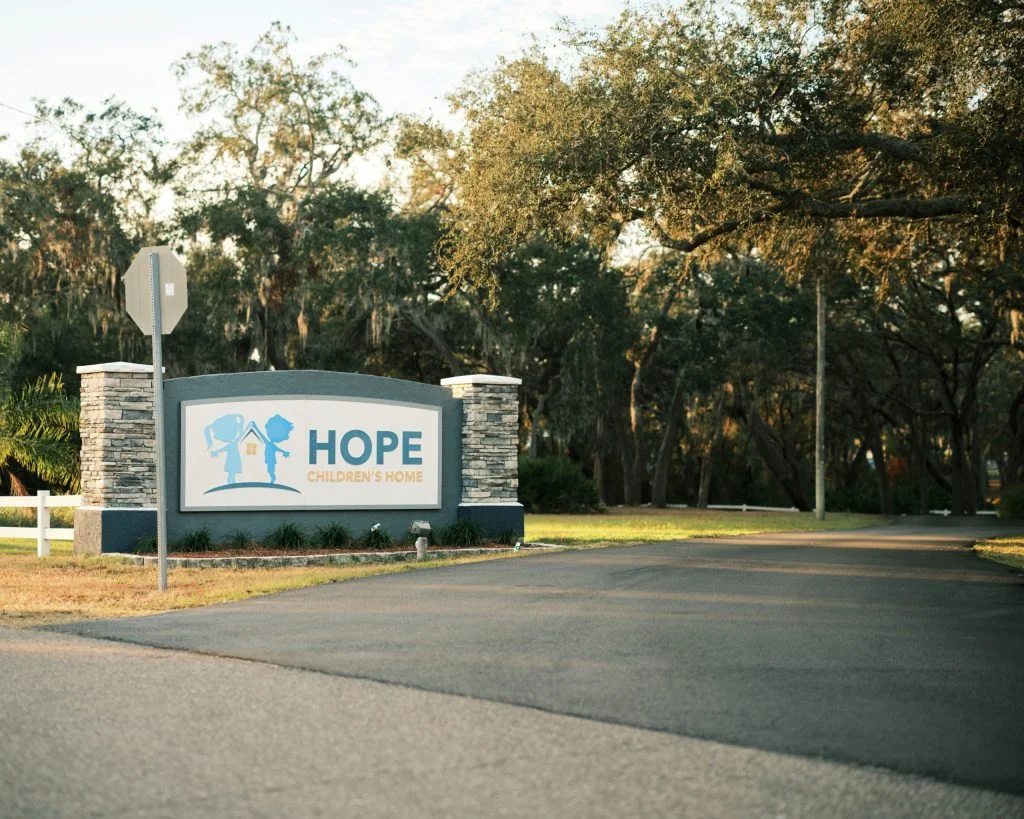
Federal tax filings reveal that the majority of association board members are themselves founders or active operators of member facilities — an arrangement that raises structural conflict-of-interest concerns among child welfare governance experts. Executive director Higgins simultaneously serves as director of Hope Children's Home in Tampa, according to that facility's website.

A review of the association's 2024 operational standards makes clear that member facilities enjoy considerably more discretion than their state-licensed counterparts in both personnel recruitment and ongoing staff development.
Among the most consequential disparities: supervisory staff at association-registered homes face no requirement to hold college degrees or demonstrate prior experience in residential care settings — qualifications that state-licensed programs must verify before placing staff in leadership roles.
The association's annual training mandate stands at a minimum of 20 hours — precisely half the threshold imposed on state-licensed facilities. Furthermore, unlike the state framework, the association imposes no requirement for training in trauma-informed care, a clinical methodology centered on recognizing and appropriately responding to trauma exposure that has become the broadly accepted industry standard in residential child care environments.
Four former employees of association-registered facilities, interviewed independently, reported that the sole training made available to them consisted of a single web-based course covering behavior management and crisis prevention techniques.
A Times reporter who completed the six-hour self-directed program found that its content was predominantly focused on situational de-escalation strategies. Within the course, Higgins instructed staff that "defensive physical measures" — including physically restraining a young person's arms or legs — were permissible in "extreme cases" involving violent behavior, without providing any hands-on demonstration of proper technique.
Martha Holden, director of Cornell University's Residential Child Care Project, reviewed the training materials at The Times's request and concluded the program was "not sufficient" preparation for staff entering residential care roles for the first time.
Physical restraint techniques, Holden emphasized, demand multi-day, in-person instruction. "That is very high risk," she cautioned. "Kids have been seriously injured or even die from that kind of intervention." By contrast, state-licensed Florida facilities mandate annual hands-on training specifically covering passive restraint protocols.
Elsewhere in the online training, Higgins recounted his response to a student who had repeatedly submitted plagiarized English assignments. After an initial warning produced no change in behavior, Higgins described deliberately choosing to "try humiliation" as a disciplinary intervention, deploying the handwritten sign. When the teenager refused to affix it to his clothing, Higgins reported ordering the youth to carry a cinder block while walking laps around the facility. The boy completed one circuit before relenting and agreeing to wear the sign — an anecdote Higgins apparently presented as a model of effective behavior management.
The association's own written standards explicitly prohibit staff from subjecting residents to "cruel or humiliating treatment" — language that child welfare specialists argue the described incident plainly violates.
Concerns about facilities operating under the association's umbrella have surfaced periodically since the late 1980s, when a home director near Port St. Lucie faced criminal charges alleging the sexual abuse of three ten-year-old residents. The charges were ultimately dismissed after the victims' mothers indicated they did not wish to proceed with prosecution, according to contemporaneous news accounts.
In 2012, an investigation by The Tampa Bay Times exposed a pattern of severe physical disciplinary practices at religious boarding schools and homes for troubled adolescents operating throughout Florida. The reporting prompted the association to prohibit the use of physical restraint devices such as handcuffs, and the Legislature responded by mandating that the association notify state regulators within 24 hours of any emergency incident at a member facility.
More recently, a Lakeland facility generated widespread public attention after a 17-year-old resident was refused medical attention and subsequently died, apparently from a seizure. Lakeland Girls Academy ceased operations in 2022 following the incident.
Child welfare experts are careful to note that formal state licensure is not a guarantee against abuse. Nevertheless, licensing "provides a framework for knowing exactly what the expectations are," observed Jean Strout, a senior attorney with the National Center for Youth Law.
"Without that, it's really just a Wild West," she said.
Florida has effectively constructed a bifurcated regulatory system governing residential care for children and pregnant teenagers, according to Shamra Boel-Studt, an associate professor of social work at Florida State University whose research centers on child welfare policy. "We have two sets of facilities: one set that is subjected to more rigorous licensing and monitoring, and another that seems to be going under the radar," she said — a structural inequity that leaves the most vulnerable residents with the fewest institutional protections.
The Legislature previously weighed dismantling the association's exclusive registration monopoly by opening the alternative licensing pathway to other qualifying nonprofits. During a 2023 committee hearing, lawmakers challenged the association's inherent conflict of interest in overseeing facilities run by its own board members and pressed Higgins directly on abuse allegations tied to the Tampa home he operates.
Higgins defended the organization before the committee, asserting that it engaged independent inspectors and characterizing the abuse allegations as unsubstantiated.
The reform measure advanced with bipartisan momentum through both legislative chambers — until the Republican senator who had introduced the Senate version, Clay Yarborough of Jacksonville, withdrew the bill from consideration without offering any public rationale for doing so.
Contacted through a spokesperson, Senator Yarborough declined to address questions about his decision to pull the legislation.
How Some Christian Group Homes Avoid Florida's Standards is a story from Reveal. Reveal is a registered trademark of The Center for Investigative Reporting and is a 501(c)(3) tax exempt organization.