This article was published in partnership with The Marshall Project, a nonprofit news organization covering the US criminal justice system.
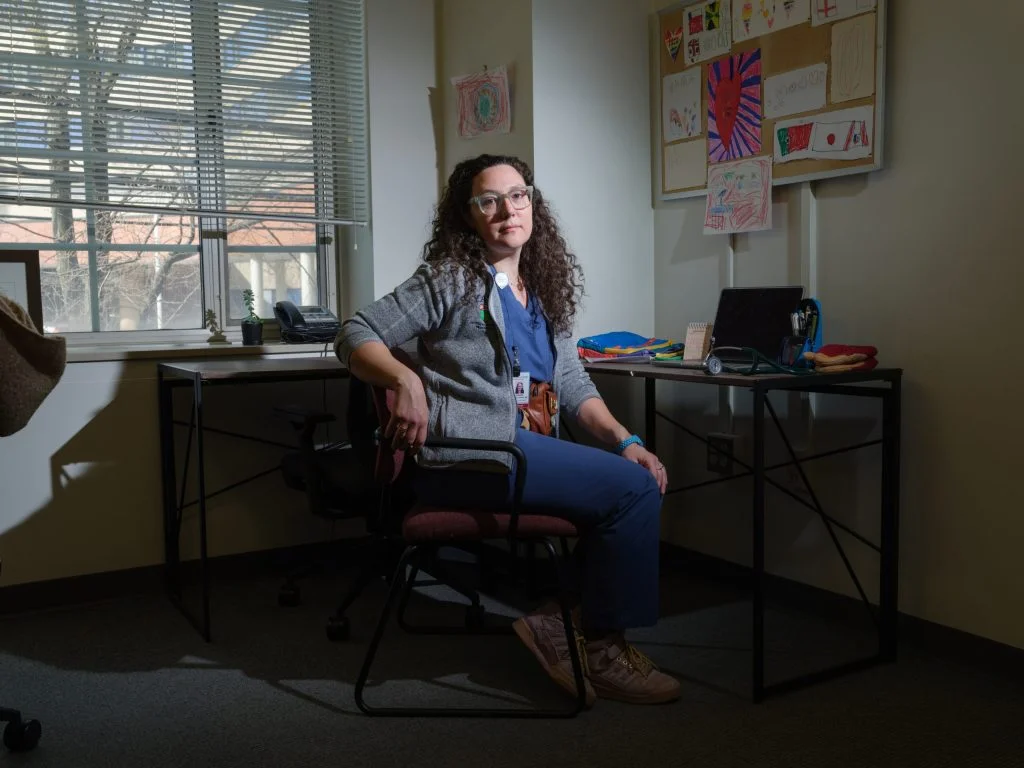
On the surface, the directive from child protective services appeared routine: authorize a toxicology screen on a newborn. For Dr. Sharon Ostfeld-Johns and her clinical team at Yale New Haven Health, such requests had become an almost reflexive part of standard operating procedure.
Yet something about this particular case stopped her cold. The patient, receiving care at Yale New Haven Health in Connecticut — the state's most expansive healthcare network — had disclosed that she'd turned to cannabis during her pregnancy to manage appetite loss and sleep disruption. That disclosure had triggered an institutional report to child welfare officials, who were now pressing Ostfeld-Johns to conduct neonatal drug screening.
From a clinical standpoint, there was no defensible rationale for the test. The infant was thriving, and the results would bear no relevance to the baby's treatment protocol. Ostfeld-Johns also had no basis to question the mother's parenting capacity — a woman who was already raising other children. What did concern her, however, were the systemic inequities lurking beneath the surface. The mother was Black and enrolled in Medicaid, and the physician understood all too well how socioeconomic and racial bias could quietly shape a caseworker's judgment about foster care placement.
"Why did I ever order these tests?" Ostfeld-Johns found herself asking, turning over past decisions in her mind. She thought about her own son, then in kindergarten, and confronted what it would mean to face a child welfare investigation on the basis of a positive screening result. A subsequent review of her own prenatal records revealed that she herself had been subjected to drug testing without her knowledge or consent. "You try to imagine what it would be like if it was you," she reflected. "The hurt that we do to people is overwhelming."
Though she had navigated similar situations before, this time Ostfeld-Johns declined to fulfill the testing request. What followed was a rigorous institutional research process that culminated in 2022 with a sweeping overhaul of Yale New Haven Health's neonatal drug screening framework. Under the revised protocol, clinicians are instructed to order toxicology screens exclusively when the results will directly inform medical decision-making — a threshold that, in practice, is rarely met. The network simultaneously developed more precise clinical criteria governing substance screening for pregnant patients throughout the care continuum.
Across the country, a significant proportion of physicians and nurses have operated under the assumption that drug testing constitutes both a medical imperative and a legal obligation in their management of pregnant patients and newborns — despite the fact that most state statutes carry no such mandate. Toxicology screening during labor and delivery has nonetheless become deeply entrenched in American obstetric practice, with a positive result routinely catalyzing a child protective services referral. Ostfeld-Johns and Yale New Haven are part of a small but measurably growing cohort of clinicians and health systems that have begun to interrogate those entrenched screening protocols — and are actively working to reorient institutional culture away from reflexive testing toward substantive, patient-centered clinical dialogue.
No centralized body appears to be systematically tracking the scope of hospital policy revisions, but over the past three years, meaningful reforms have taken root across diverse health systems nationwide, from California to Colorado and Massachusetts. The institutions driving this shift span the full spectrum of American healthcare — large nonprofit academic networks, teaching hospitals, and investor-owned private facilities alike.
While reform-minded physicians contend that legislative intervention remains essential to mandate systemic reductions in testing, momentum at the institutional level appears to be building organically. In Colorado, clinicians collaborated with a child abuse prevention nonprofit to develop and disseminate a voluntary best-practice framework, which has already prompted several hospitals to restructure their protocols. An independent educational initiative, "Doing Right by Birth," convened virtual learning cohorts of healthcare professionals across the country in 2023 to clarify the actual contours of their legal obligations. A number of participants were genuinely surprised to discover that most state laws impose no affirmative duty to screen pregnant patients or newborns — a revelation that has since fueled internal policy challenges at their respective institutions, signaling that the wave of reform may still be cresting.
At Yale, Ostfeld-Johns encountered institutional friction when she first advanced the policy revision. Several colleagues harbored genuine concern that stepping back from near-universal screening would leave vulnerable infants unprotected — that the hospital would lose its ability to identify prenatal substance exposure before it became a clinical crisis. Ostfeld-Johns and her team, however, discovered that toxicology results were not, in fact, necessary to detect neonates at risk of developing opioid withdrawal syndrome requiring medical intervention.
The outcomes data from New Haven tells a compelling story. Following implementation of the revised policy, child welfare referrals originating from the newborn nursery fell by nearly 50 percent, according to preliminary figures provided by Ostfeld-Johns. Critically, this reduction in reporting was not accompanied by any increase in infants presenting with unmanaged withdrawal or requiring emergency intervention. "No babies came in with uncontrolled withdrawal symptoms," she stated. "No safety events were identified."
That clinical experience resonates with practitioners at other institutions navigating similar transitions. "I don't think we're missing babies" who have experienced prenatal substance exposure, said Dr. Mark Vining, medical director of the newborn nursery at UMass Memorial Medical Center outside Boston, which eliminated automatic neonatal screening in 2024. Vining also noted a consequential secondary benefit: fewer families were being reported to child welfare authorities due to positive tests attributable to hospital-administered analgesics like morphine. A neonatal toxicology panel, he observed, "rarely adds any information that you didn't already know."
These emerging policy shifts are beginning to dismantle a clinical paradigm that has been institutionally embedded in American obstetric and neonatal practice for the better part of four decades.
Routine maternal drug screening took hold during the crack cocaine crisis of the 1980s, initially framed as a public health response to a specific epidemic. The practice expanded considerably during the opioid crisis, reinforced by federal legislation enacted in 2003 and a subsequent statute in 2016, both of which obligate hospitals to notify child protective services whenever a newborn is determined to have been "affected by" controlled substances. Importantly, neither federal law nor the statutes of most states actually compel hospitals to conduct toxicology screening on new mothers or their infants — yet testing has proliferated regardless, driven largely by institutional anxiety about liability and missed risk identification.

The downstream consequences of this widespread screening culture have been extensively documented and are deeply troubling. A prior investigative series by The Marshall Project established that urine immunoassay testing — the modality deployed by the majority of hospitals — is highly susceptible to misinterpretation and carries false positive rates reaching as high as 50 percent. Families have been referred to child protective services on the basis of erroneous results triggered by everyday substances ranging from poppy seeds to antihypertensive medications. Pharmacological agents administered during the hospital stay itself — including fentanyl delivered via epidural — can register on maternal toxicology panels and transfer rapidly across the placental barrier, producing positive neonatal screens for substances the mother never independently consumed.
Structural inequities compound these diagnostic limitations in clinically significant ways. Multiple peer-reviewed studies have documented that low-income women and women of color — including Black, Latina, and Indigenous patients — bear a disproportionate burden of testing. Internal data from Yale New Haven Hospital revealed that, prior to policy reform, Black neonates were subjected to toxicology screening at twice the rate of their White counterparts. The disparities do not end at the testing threshold: research indicates that racial inequities extend through the child welfare pipeline, with Black, Latino, and Indigenous infants demonstrably less likely to be reunified with their families following removal.
In the operational reality of most hospitals, toxicology screens serve a fundamentally non-clinical function. Rather than informing treatment decisions, they have evolved into an inexpensive, rapid proxy for evaluating parental fitness — a purpose for which, clinicians argue, they are profoundly ill-suited.
"We should be doing medical tests for medical reasons, not criminal, punitive, prosecutorial reasons," argued Dr. Christine Gold, a pediatrician practicing within the University of Colorado Hospital system in the Denver metropolitan area. Even when evaluated on its ostensible merits as a risk-assessment instrument, Gold maintained, the test fails. "It is a really poor-quality test," she said. Toxicology results cannot quantify the frequency or volume of substance use during gestation, establish whether a patient meets diagnostic criteria for a substance use disorder, or offer any meaningful insight into parenting capacity or behavior. "Toxicology tests are not parenting tests," Gold stated plainly.
In 2020, Colorado legislators took the significant step of removing a positive birth toxicology screen from the enumerated triggers for mandatory child welfare reporting. Yet hospital testing practices changed little in the immediate aftermath, prompting Gold to spearhead the development of statewide clinical guidance in 2023 advocating for a medically indicated-only testing standard. The entire University of Colorado Health system is now engaged in a comprehensive policy overhaul governing prenatal substance screening, with additional health systems across the state reportedly evaluating parallel reforms.
The revised institutional frameworks center on validated screening questionnaires as the primary clinical tool — structured instruments that capture a patient's personal and family history of substance use, patterns of consumption, and relevant psychosocial risk factors. Leading professional medical societies and clinical researchers affirm that these instruments demonstrate meaningful efficacy in identifying active addiction and elevated risk profiles, enabling clinicians to connect patients with treatment resources and to anticipate whether a neonate may require specialized postnatal monitoring. Many hospitals retain targeted testing protocols for defined high-risk clinical scenarios. At UMass Memorial, for instance, patients carrying a confirmed diagnosis of substance use disorder and those presenting for delivery without any prior prenatal care continue to undergo toxicology screening.
For many clinicians, the momentum building around testing reform represents a genuine inflection point — an opportunity to reconstitute the therapeutic relationship between providers and the patients most vulnerable to institutional harm. But the durability of this shift depends substantially on clinicians' capacity to cultivate authentic trust with their patients, creating conditions in which individuals feel safe enough to disclose substance use honestly and to engage voluntarily with treatment pathways. "That is really the goal here," said Dr. Katherine Campbell, chief of obstetrics at Yale New Haven Hospital. "We're trying to reduce substance use disorder in reproductive-age people."
Achieving that goal will require substantive changes to clinical practice — among them, obtaining genuinely informed consent before administering any drug test and ensuring that patients receive transparent, accessible information about both the clinical purpose of the screen and its potential legal ramifications.
These conversations, however, are neither simple nor brief. They demand extended clinical encounters that many healthcare systems are structurally and financially ill-equipped to support. "The system is set up to make it difficult for us to really develop a knowing and trusted relationship with a family," observed Dr. Lauren Oshman, a family physician at the University of Michigan Medical School in Ann Arbor.

The efficiency calculus, by contrast, strongly favors the status quo: urine collection is transactional, requiring minimal clinician engagement and virtually no relationship-building investment.
"It takes longer to talk to someone and really understand than it does to place an order and have the person give a urine sample," Campbell acknowledged candidly.
Nor do revised institutional policies resolve all of the embedded structural problems. When Oshman and her colleagues identified a statistically significant racial disparity in neonatal drug testing rates at Michigan Medicine — with Black newborns screened at substantially higher rates than White newborns — the hospital system revised its policy in 2023 to restrict neonatal testing to specific clinical indications. Early outcome data, however, suggests the policy change produced no measurable reduction in racial testing disparities.
Oshman attributes this persistent gap in part to the constraining effect of Michigan state law, which mandates reporting whenever a provider "knows or suspects" that a newborn has been exposed to "any amount" of a controlled substance — a threshold that explicitly encompasses cannabis, which is legal for adult use in Michigan. A deep-dive analysis of the network's patient data revealed that in nearly half of all low-risk cases where a newborn screened positive, cannabis was the sole substance detected — and those patients were disproportionately Black. The clinical and child welfare stakes of this pattern are significant: the overwhelming majority of cannabis-only cases are not substantiated as abuse or neglect by child protective services, according to the research team's own findings. Yet under existing statute, hospitals remain legally obligated to file those reports regardless.
"And that won't change until the state law changes," Oshman said.
The legislative landscape in most states presents analogous constraints. A comprehensive review conducted by The Marshall Project identified at least 27 states with statutes explicitly requiring hospitals to notify child welfare agencies following a positive toxicology screen or identified prenatal substance exposure — with no state mandating confirmatory testing prior to the filing of a report.
Notably, many of the health systems that have successfully implemented reformed protocols operate in states where the reporting trigger is more narrowly defined. In both Colorado and Connecticut, the statutory obligation to report is conditioned on the identification of independent safety concerns beyond a positive screen alone. Connecticut has implemented an additional safeguard: a de-identified data collection mechanism that allows the state to monitor substance-exposed newborn outcomes without generating an automatic child welfare referral.
Even within more permissive statutory environments, however, testing continues at high rates. New York State's Department of Health issued guidance in 2021 advising hospitals to screen labor-and-delivery patients only when "medically indicated" and exclusively with explicit patient consent. Despite that directive, women continue to report being tested without consent at hospitals across the state — with positive and erroneous results subsequently triggering child welfare referrals, as documented in ongoing reporting by The Marshall Project.
The persistence of these challenges underscores what experts increasingly characterize as a fundamental truth: meaningfully reducing the harms generated by perinatal drug testing will require a coordinated, multi-layered strategy — one that integrates statutory reform, institutional policy revision, robust enforcement mechanisms, and sustained professional education.
"We're just at the beginning," Oshman said. "This is the start of creating a system that provides that trustworthy care."
Why Some Doctors Are Pushing to End Routine Drug Testing During Childbirth is a story from Reveal. Reveal is a registered trademark of The Center for Investigative Reporting and is a 501(c)(3) tax exempt organization.